Provider Frameworks Connecting Promotional Cycles with Reel Advancements in Secure Transaction Systems
Jonas Weber · Aug 20, 2026
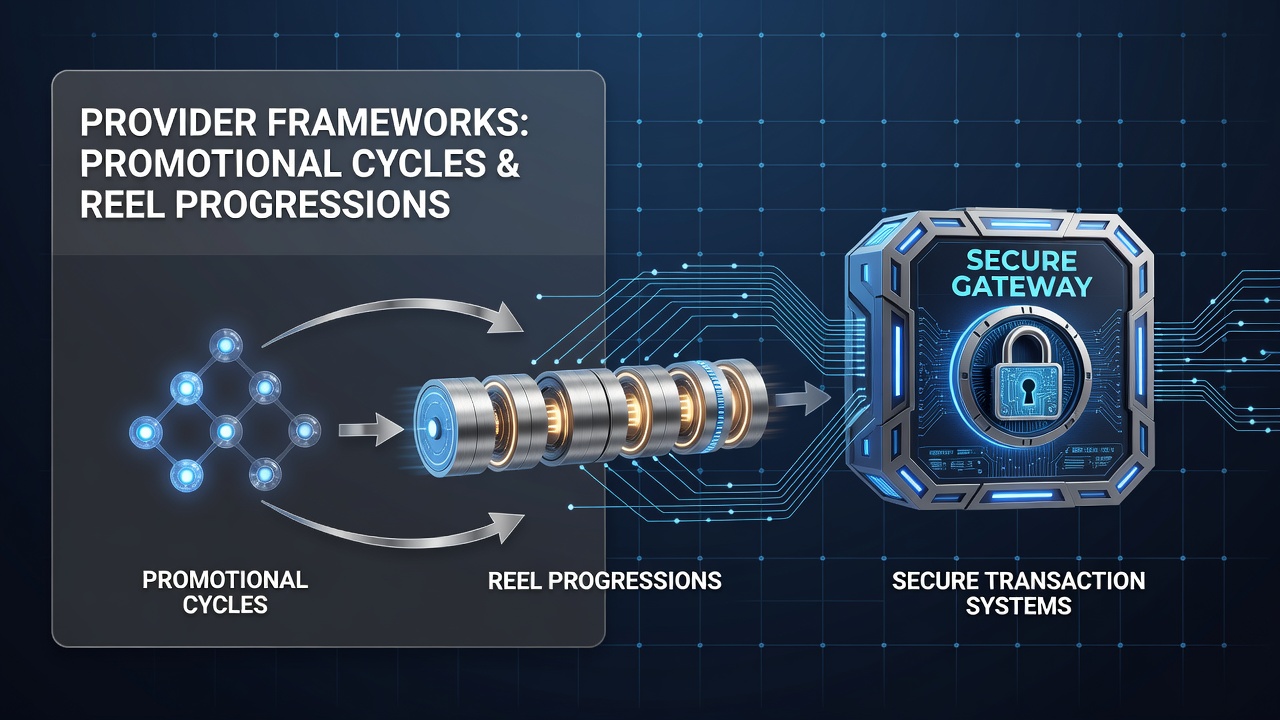
Provider Frameworks Connecting Promotional Cycles with Reel Advancements in Secure Transaction Systems
Game providers have developed integrated frameworks that tie promotional cycles directly to reel progressions while routing all activity through secure transaction systems that handle deposits, bonuses, and withdrawals in one continuous flow, and these structures emerged as operators sought to reduce friction between marketing incentives and actual gameplay mechanics across mobile and desktop platforms.
Core Components of Provider Frameworks
Frameworks from major studios combine bonus engines with reel engines so that a free spin award automatically adjusts symbol weights and progression meters inside the game, while the same system logs the transaction to a secure payment gateway that verifies player eligibility before any funds move, and this linkage ensures that promotional triggers update reel states in real time without separate calls to external servers.
Developers achieve this by embedding API layers that share a common data model, where a promotional cycle event such as a deposit match sends parameters straight to the reel engine and simultaneously updates the transaction ledger, and observers note that this approach cuts latency by combining what used to require multiple handshakes between marketing platforms and game servers.
How Promotional Cycles Drive Reel Progressions
Promotional cycles typically begin with a trigger such as a first deposit or loyalty milestone, after which the framework assigns a reel progression path that might include increasing multiplier ladders or unlocking special symbols on subsequent spins, and data from platform logs shows these paths remain active only while the linked transaction remains valid within the secure system.
One case involved a provider that mapped a series of daily login bonuses to a cascading reel mechanic where each completed cycle advanced a persistent meter, and the secure transaction layer recorded every meter increment so that players could resume progress on any device without losing state, while the same records supported audit trails required by regulators in multiple jurisdictions.
Secure Transaction Systems as the Connecting Layer
Secure transaction systems use tokenised payment rails and encrypted ledgers to move both real funds and bonus credits through identical verification steps, which allows promotional rewards to appear as reel modifiers without exposing separate accounting channels, and this unified approach has become standard since providers began requiring all bonus-related reel changes to carry cryptographic proof of origin.

Industry reports from the American Gaming Association indicate that operators adopting these unified frameworks recorded higher session completion rates because players could see their promotional progress reflected instantly on the reels while the backend transaction system processed the corresponding ledger entries without interruption, and similar patterns appear in data released by the Australian Communications and Media Authority covering licensed online gaming operations.
Implementation Patterns Observed in August 2026
By August 2026 several studios had released updated software development kits that bundled promotional cycle management with reel progression scripts inside a single secure transaction wrapper, and testing logs from those releases showed reduced reconciliation errors because every reel state change carried an immutable transaction reference that payment processors could validate in milliseconds.
These kits also incorporated conditional logic so that a promotional cycle ending mid-session could pause reel progression and queue the remaining steps for the next authenticated transaction, while the secure system maintained the state across logins without requiring players to re-enter bonus codes, and researchers at institutions studying digital payment security have examined these patterns for their implications on fraud detection speed.
Benefits Documented Across Multiple Markets
Operators report that frameworks linking promotions to reels through secure transactions reduce support tickets related to missing bonuses because the reel engine and the payment ledger share the same event log, and this shared log lets customer service teams trace a promotional cycle from trigger to reel outcome in a single query rather than cross-referencing separate databases.
European trade groups tracking digital gaming platforms have noted that such integration supports compliance reporting because every reel progression tied to a promotion generates an auditable transaction record that meets data retention standards in several countries, while the same records help operators demonstrate that bonus funds move only through verified channels.
Future Directions for Framework Development
Providers continue to refine these frameworks by adding real-time risk scoring inside the transaction layer so that reel progressions linked to promotions can pause automatically if suspicious activity flags appear, and early adopters have tested versions where the secure system can reroute a promotional cycle to a different reel path based on player behaviour signals without manual intervention.
Academic papers from payment security research groups have analysed these evolving connections and found that the combined promotional and reel engines reduce the attack surface for certain types of bonus abuse because every state change must pass through the same cryptographic verification used for actual fund movements.
Conclusion
Provider frameworks that connect promotional cycles to reel progressions through secure transaction systems have become a standard architecture in licensed gaming environments, and the integration delivers measurable improvements in session continuity and audit efficiency while maintaining compliance with transaction security requirements across different regulatory regions. Data from multiple sources continues to track how these unified systems evolve as new payment technologies and reel mechanics enter the market.